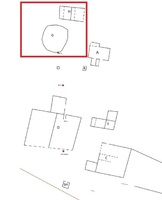
Loci G and H
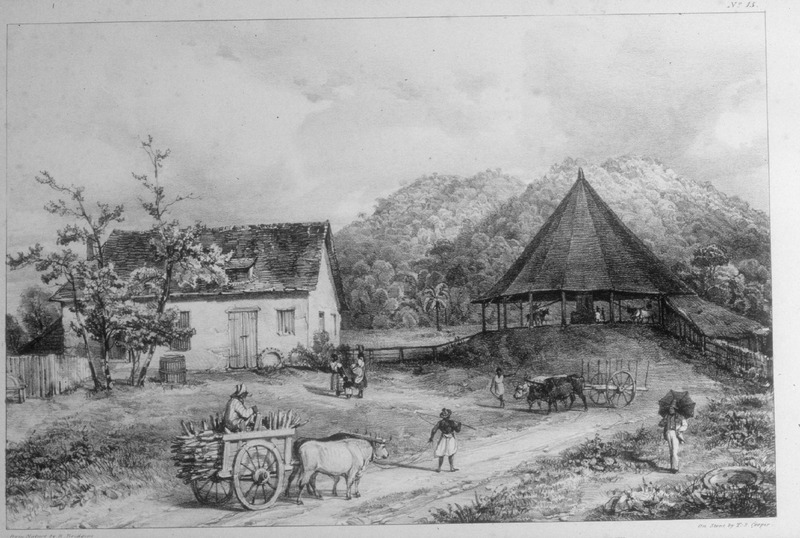
Carting Canes to the Mill
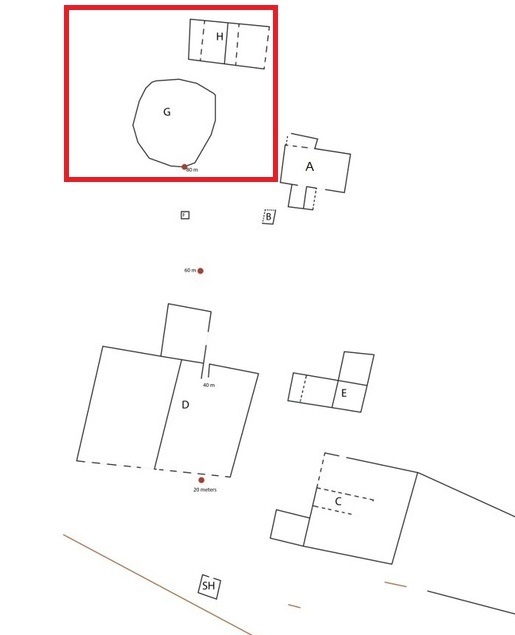
Loci G and H
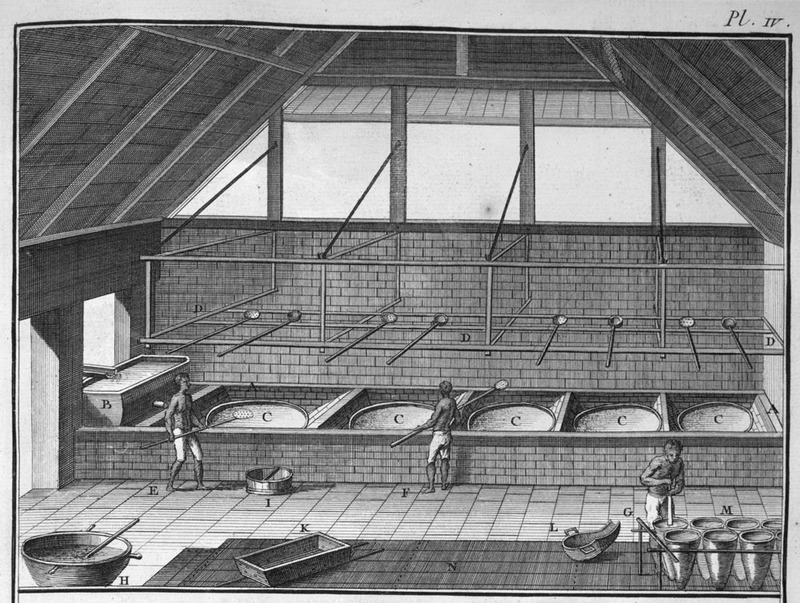
Interior of a Boiling House, French West Indies, 1762
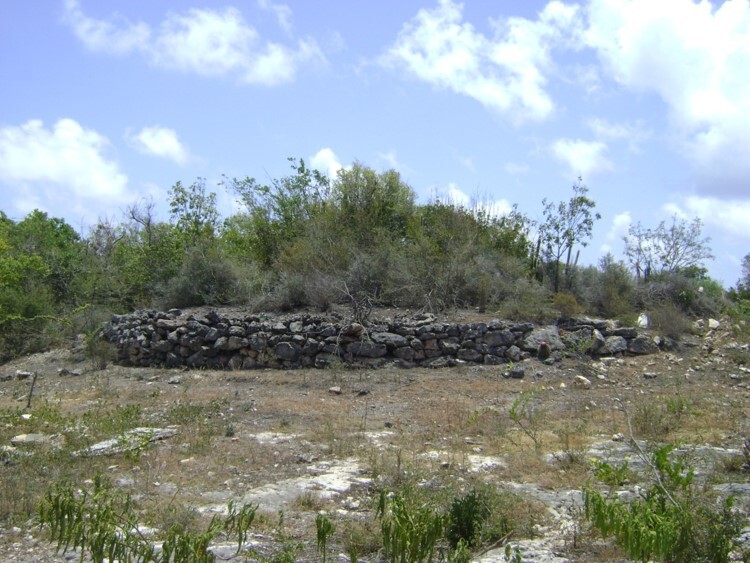
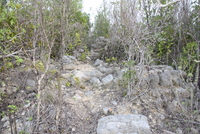
Cattle mill from Richardson Plantation
Loci G and H were part of the plantation sugar works. Enslaved workers would have brought the sugar cane to the mill (G) to be crushed. The mill would have been powered by cattle, oxen or horse.
After being processed in the mill, raw cane juice would have flowed down hill to Locus H where it would be boiled in a series of cauldrons. The boiling house (H) at Hughes was divided by four partitions.
It is possible that the foundations within the Locus H structure are remnants of a boiling train set along the northern wall. The eastern partition may have been a vat or cistern.
Pictured to the left: The 19th century sketch Carting Canes to the Mill depicts sugar cane being brought to the sugar works at a plantation in Trinidad. Like at Hughes, in this image, the mill (R) is slightly elevated compared to the boiling house (L). The cattle mill at Hughes Estate may have looked similar to the mill in this image when in operation.
Pictured to the Right: The 18th century plate Interior of a Boiling House depicts enslaved laborers processing sugar in a boiling house. The sugar flows from the mill to a tank (B), where it then boils in a series of cauldrons (C). The enslaved laborers move the crystalizing sugar from one iron cauldron to the next with giant ladles. The prodcut would then drain in clay sugar pots, pictured in the bottom right corner (M).
Bricks, charcoal and thick fragments of iron were the most prevalent artifact types found in association wtih locus H. Iron fragments are likely the remains of the boiling house coppers (cauldrons).
Pictured to the Right: Due to dense vegetation coverage, it was not possible to photograph Loci G and H at Hughes Estate. Locus G is currently in similar condition to the mill at the Richardson Plantation, an Anguillian plantation from the same period as Hughes.
Title
Description
material: stone
Subject
Creator
Extent
Boiling house dimensions: ~13 x 6.45 meters ( partitioned into 4 sections : 2.25 m, 4.25 m, 2.25 m, ~4.25 m in width each)
Item sets